German Shepherd Australian Shepherd Mix: The Complete Owner’s Guide
German Shepherd Australian Shepherd Mix: The Complete Owner’s Guide (2026)
If you’ve stumbled onto this mix — sometimes called the German Australian Shepherd, Shepaussie, or Aussie German — you’ve likely already done enough reading to know these dogs are exceptional. What you probably haven’t found yet is someone being completely honest about what they demand in return.
This guide covers everything: size, temperament, the health risks your vet might not mention on the first visit, and a practical framework to help you decide whether this mix belongs in your home. Let’s get into it.

What Is the German Shepherd Australian Shepherd Mix?
The German Shepherd Australian Shepherd mix is a first-generation hybrid cross between two of the most capable working dog breeds ever developed — the German Shepherd Dog (GSD) and the Australian Shepherd. Both parents sit firmly in the AKC’s Herding Group. In the AKC’s 2025 breed popularity rankings, the German Shepherd holds the #4 spot (unchanged from 2024), while the Australian Shepherd holds #12 — making both parent breeds well-established, widely available, and extensively health-studied.
The result is a dog that carries a double dose of herding instinct, intelligence, loyalty, and energy. That combination creates an extraordinary companion for the right owner — and a genuinely difficult situation for the wrong one.
Common names for this mix:
- German Australian Shepherd
- Shepaussie
- Aussie German
- German Shepherd Aussie mix
- Aussie GSD
This is not an AKC-recognized breed. Like all designer hybrids, there are no formal breed standards, which means individual dogs can vary considerably in size, coat type, and temperament depending on which parent they take after most.
| Trait | Details |
|---|---|
| Other Names | German Australian Shepherd, Shepaussie, Aussie German |
| Height | 20–26 inches |
| Weight | 45–80 lbs |
| Lifespan | 12–15 years |
| Energy Level | Very High |
| Exercise Needed | 90 minutes – 2 hours daily (minimum) |
| Shedding | Heavy (year-round, heavier twice yearly) |
| Grooming | Brush 3–4 times per week |
| Trainability | Excellent, but best with experienced owners |
| Good with Kids? | Yes, with proper socialization |
| Good with Other Dogs? | Generally yes, with early exposure |
| Apartment-Friendly? | No, requires space and a secure yard |
| AKC Recognition | None (Hybrid Breed) |
| Price Range | $600–$1,800 (from reputable breeders) |
Use our Adult Size Predictor Tool to estimate your puppy’s likely adult weight Run the Behavior & Temperament Assessment Tool if you already own one of these mixes
Read our GSD Hip Dysplasia guide for detailed health management strategies Start your training plan with our German Shepherd Training Timeline
Parent Breeds: Where These Traits Come From
Understanding the parent breeds isn’t just background reading — it’s the most reliable way to predict what a given puppy will grow into.
The German Shepherd
Originally bred in Germany in the late 19th century by Max von Stephanitz, the German Shepherd was purpose-built for herding and guarding sheep. Within decades, the breed’s intelligence, trainability, and physical capability made it the go-to dog for police work, military operations, and search-and-rescue worldwide. According to a 2025 study published in Frontiers in Veterinary Science, German Shepherds remain one of the two primary breeds in the U.S. Department of Defense’s working dog program.
The GSD brings size (typically 50–90 lbs), a dense double coat, strong guarding instinct, and a tendency toward loyalty that borders on velcro behavior. It’s a demanding breed that ranks #3 in Stanley Coren’s canine intelligence rankings — capable of learning a new command in fewer than five repetitions.
Key health consideration: According to OFA data from over 115,000 evaluations, approximately 20% of German Shepherds have hip dysplasia. This is the most important health metric to understand for any GSD-derived mix.
The Australian Shepherd
Despite the name, the Australian Shepherd developed in the American West as a cattle and sheep herding dog. Today it ranks #12 on the AKC popularity list (2025) — a testament to its enduring appeal as both a working dog and a family companion.
The Aussie brings a slightly lighter frame (35–65 lbs), the iconic merle coat pattern, high-voltage energy, and a brain that craves constant stimulation. It’s also where one of the most important health considerations for this mix originates: the MDR1 gene mutation (covered in detail in the Health section below).
Size and Appearance
The German Shepherd Australian Shepherd mix is a medium-to-large dog. Most adults weigh between 45 and 80 pounds and stand 20 to 26 inches tall at the shoulder. Because this is an F1 cross (first-generation), there’s genuine variance — some puppies lean GSD-heavy and come out closer to 80 lbs with a classic tan-and-black saddle pattern; others favor the Aussie parent and stay lighter with a merle or tricolor coat.
Coat: Most carry a moderately long double coat — a dense, weather-resistant outer layer over a soft undercoat. Some individuals inherit the Aussie’s feathering around the ears, chest, and tail. Expect heavy shedding year-round with two significant seasonal blowouts.
Coat colors can include: black and tan, sable, tricolor (black/white/tan), blue merle, red merle, red tricolor, and solid black. Unlike either parent breed alone, some German Australian Shepherds display unusual hybrid colorings like brindle-influenced patterns or silver-gray patches on tricolor dogs.
Eyes: Aussie genetics mean some puppies will have hazel, amber, or even blue eyes — including heterochromia (two different-colored eyes), a trait that’s visually striking but functionally normal.
Ears: Typically larger than an Aussie’s, with a partial forward fold rather than the GSD’s fully erect ear. Some individuals have fully erect ears; this depends on which parent contributes more to skull structure.
One defining physical trait: if the Aussie parent carries the natural bobtail gene (common in the breed), some puppies may be born with shortened or naturally docked tails.
Temperament and Personality
This is where the “double herder” aspect truly defines the dog. Both parent breeds were bred to think independently, make decisions under pressure, and work in close partnership with their humans. The result is a dog that is:
Loyal to the point of intensity. German Australian Shepherds typically choose one or two primary humans and form bonds that are deep, lasting, and occasionally clingy. Separation anxiety is a real concern for this mix — both parent breeds are prone to it, and the combination amplifies the risk.
Alert and protective. These dogs notice everything. They will alert-bark at strangers, new sounds, and unfamiliar situations. With proper socialization, they warm up to visitors readily. Without it, wariness can tip into reactivity.
Gentle with family members they trust. Owners consistently report that these dogs read the emotional temperature of a room — knowing when to bring energy and when to settle down. One owner on Wag! described her dog bringing a pile of socks to anyone who was upset, as a comfort gesture.
Excellent with children they’re raised with. The herding instinct, however, can manifest as nipping at the heels of running children — this is a behavioral pattern, not aggression, but it requires consistent training correction.
Demanding of mental engagement. Under-stimulation is the single biggest cause of behavior problems in this mix. A bored German Australian Shepherd doesn’t just chew a shoe — it redecorates a room.
Intelligence and Trainability
These dogs are exceptionally smart. The German Shepherd ranks #3 in canine intelligence by Stanley Coren’s measures. While the Australian Shepherd ranks lower on Coren’s obedience-based scale (due to its independent thinking style rather than lack of raw intelligence), Aussies are widely regarded as among the most problem-solving capable breeds in the world.
What this means in practice: your dog will learn fast, and it will learn whatever you teach — including things you didn’t intend to teach.
Training recommendations:
- Start socialization at 8–12 weeks: expose to a wide variety of people, environments, sounds, and dogs
- Use positive reinforcement exclusively — punishment-based methods tend to produce anxiety and reactivity in this mix
- Begin obedience training early; both parent breeds can develop pushy, dominant behaviors if boundaries aren’t set clearly in puppyhood
- Mental stimulation is as important as physical exercise — puzzle feeders, nose work, agility training, and obedience trials are all well-suited to this mix
- Herding-specific nipping behavior needs to be addressed early, especially if children are in the household
This is not a beginner’s dog. First-time dog owners often struggle with the combination of intelligence, energy, and herding impulse. If you’re new to dogs, invest in a qualified positive reinforcement trainer before or immediately after bringing the puppy home.
Exercise Requirements
This is the non-negotiable dealbreaker section.
A German Shepherd Australian Shepherd mix needs a minimum of 90 minutes to 2 hours of vigorous physical activity every day. Not a casual walk around the block — actual running, fetch, off-leash play in a secure yard, hiking, swimming, or structured dog sports.
Activities this mix excels at:
- Agility trials
- Herding trials (yes, even in suburban settings, herding-focused training classes exist)
- Flyball
- Scent work / nose work
- Long-distance trail running or hiking
- Frisbee and fetch (high-drive retrieving is common in this mix)
What happens without adequate exercise: destructive behavior, excessive vocalization, fence running, inappropriate herding of household members, and generalized anxiety. These aren’t character flaws — they’re the predictable result of a working-dog brain with nowhere to direct its energy.
For apartment dwellers: This mix is not suitable for apartment living. It requires a securely fenced yard and ideally a rural or suburban setting with access to open space.
Grooming and Shedding
The German Australian Shepherd’s double coat is beautiful and high-maintenance. Budget for:
- 3–4 brushing sessions per week minimum (daily during shedding season)
- A quality de-shedding brush (slicker brush + undercoat rake combination)
- Baths every 6–8 weeks — over-bathing strips the coat’s natural oils
- Monthly nail trimming
- Ear checks weekly — the partially folded ear can trap moisture and debris, increasing infection risk
- Dental brushing 2–3 times per week
During the twice-yearly seasonal coat blow (spring and fall), daily brushing is essential to manage the volume of loose undercoat. A professional de-shed grooming session once or twice a year is worth the investment.
Coat note: If your dog inherits the Aussie’s merle coat, be aware that double merle breeding (two merle-coated dogs bred together) produces puppies at high risk of deafness and blindness. This is a breeder ethics issue — always ask whether either parent is also merle-coated before purchasing from a breeder.
Health and Lifespan
The German Australian Shepherd has a reported lifespan of 12 to 15 years — meaningfully longer than either parent breed alone. This is partly attributable to hybrid vigor: the genetic diversity in F1 crosses reduces the expression of breed-specific recessive conditions that accumulate in purebred populations.
However, this mix is not without health considerations. There are two conditions every owner and prospective buyer must understand.
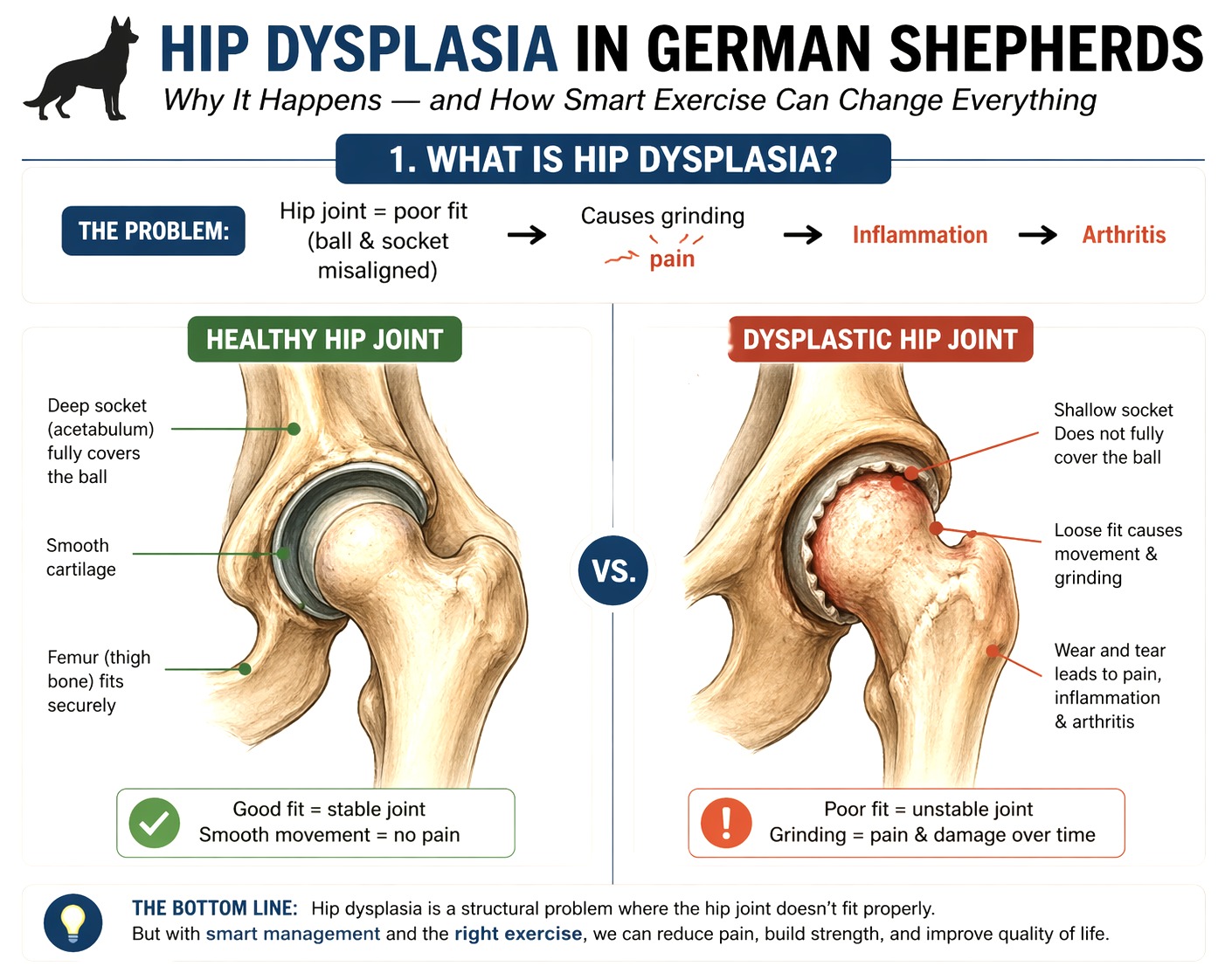
1. Hip and Elbow Dysplasia (GSD-Derived Risk)
According to OFA data from over 115,000 German Shepherd evaluations, approximately 20% of GSDs have hip dysplasia — one of the highest prevalence rates among large breeds. Elbow dysplasia affects a further ~19% (OFA, 54,596 evaluations). These are not rare complications; they are defining health characteristics of the German Shepherd side of this mix.
Mixed-breed status reduces (but does not eliminate) this risk through hybrid vigor. Always ask breeders for OFA or PennHIP certification on both parent dogs’ hips and elbows. Refuse any breeder who cannot provide this documentation.
Prevention strategies:
- Feed a large-breed puppy formula to support controlled bone growth
- Avoid high-impact exercise (jumping, stair repetition) in the first 12–18 months
- Maintain a lean body weight throughout the dog’s life
2. MDR1 Gene Mutation (Aussie-Derived Risk — Underreported)
The MDR1 (ABCB1) gene mutation is carried by a significant portion of Australian Shepherds and affects how the dog metabolizes certain common drugs — including ivermectin (found in many heartworm preventives), loperamide (Imodium), acepromazine, and several chemotherapy agents.
In affected dogs, these medications can cross the blood-brain barrier and cause neurological toxicity, seizures, coma, and death. The mutation affects approximately 35–50% of purebred Australian Shepherds, and can be inherited by any Australian Shepherd-derived mix including this one.
What to do: Request an MDR1 genetic test from your breeder, or test your dog through a laboratory such as Washington State University’s College of Veterinary Medicine. If your dog tests positive for the mutation, alert your vet before any sedation, heartworm treatment, or anti-diarrheal medication is prescribed.
Other Health Considerations
- Degenerative Myelopathy (DM): A progressive spinal cord disease affecting ~14% of GSDs. A genetic test exists — request it from breeders.
- Collie Eye Anomaly (CEA): An Aussie-inherited eye condition; OFA-CAER eye exams should be requested from the Aussie parent.
- Epilepsy: Both parent breeds have documented epilepsy lines; ask breeders about family history.
- Bloat (GDV): Deep-chested GSD heritage increases risk; avoid vigorous exercise for an hour before and after meals.
The Double Herder Compatibility Matrix
Most breed guides end their “Is this dog right for you?” section with a simple checklist. This compatibility matrix provides a more practical framework to help determine whether a high-energy herding breed fits your lifestyle.
Score yourself on each category from 1–5 (1 = Low, 5 = High).
| Compatibility Factor | Assessment Question | Recommended Score |
|---|---|---|
| Activity Level | How many hours of vigorous outdoor activity do you engage in weekly? | 4–5 Daily runner, hiker, cyclist, or athlete. |
| Training Experience | Have you successfully trained an intelligent, high-drive dog before? | 3–5 Previous experience with working or herding breeds preferred. |
| Living Situation | Do you have a securely fenced yard and a quiet residential or rural environment? | 4–5 House with yard minimum; rural setting ideal. |
| Time Availability | Are you home most of the day, or can you provide regular company and stimulation? | 3–5 Work-from-home setup or daily dog walker/daycare support. |
Score Interpretation
16–20 Points
Excellent match. This breed aligns strongly with your lifestyle, and you are likely to bring out its best qualities.
11–15 Points
Proceed carefully. Address any gaps with professional training, structured exercise, and a long-term enrichment plan.
10 Points or Below
Consider a lower-energy breed or an adult rescue dog with a known temperament and exercise profile.
German Australian Shepherd Feeding & Nutrition Guide
A German Australian Shepherd requires a high-quality, protein-rich diet designed for medium-to-large active dog breeds. Proper nutrition supports healthy muscle development, energy levels, joint health, and overall wellbeing.
General Feeding Guidelines for Adult Dogs
| Dog Weight | Recommended Daily Kibble | Feeding Schedule |
|---|---|---|
| 45–55 lbs | 2.5–3 Cups per day | 2 meals (morning & evening) |
| 55–70 lbs | 3–3.5 Cups per day | 2 meals daily |
| 70–80 lbs | 3.5–4 Cups per day | 2 meals daily |
Important Feeding Notes
- Choose a premium dog food with animal protein as the primary ingredient.
- Adjust portions based on age, activity level, metabolism, and health status.
- Provide fresh, clean water at all times.
- Avoid vigorous exercise immediately before and after meals.
- Consult your veterinarian for breed-specific dietary recommendations.
Amounts are estimates for moderately active adults. Working dogs or those in active sports may need 20–30% more.
Key dietary considerations:
- Puppies (under 18 months): Feed a large-breed puppy formula specifically — these control calcium and phosphorus ratios to support healthy bone development and reduce dysplasia risk
- Joint support: Look for foods with glucosamine and chondroitin, or supplement separately from 2–3 years onward
- Meal size and bloat risk: Feed 2 smaller meals rather than one large meal, and limit vigorous exercise within 60 minutes of feeding
- Weight management: A lean body condition directly impacts lifespan and joint health. You should be able to feel (but not see) your dog’s ribs.
For India-based readers: quality large-breed options available in the Indian market include Royal Canin German Shepherd formula, Drools Active Adult, and Pedigree Adult Large Breed. Supplement with cooked chicken, eggs, and paneer for additional protein where needed.
Finding a German Australian Shepherd: Breeder vs. Rescue
Buying from a Breeder
Expect to pay between $600 and $1,800 USD for a puppy from a reputable breeder. Higher prices reflect documented health testing on both parents.
Non-negotiable asks from any breeder:
- OFA or PennHIP hip and elbow certification on both parents
- MDR1 genetic test results on the Aussie parent (or the puppy itself)
- CAER (Canine Eye Registry) certification for CEA on the Aussie parent
- DM genetic test results on the GSD parent
- Puppy has been vet-examined and vaccinated before sale
- Breeder offers a written health guarantee
Red flags: No health documentation, reluctance to let you see the facilities, multiple litters available year-round, or a price that seems too low to justify the testing costs.
Adoption/Rescue
Both German Shepherds and Australian Shepherds are frequently surrendered to shelters — often because their energy and intelligence proved too much for unprepared owners. This means German Australian Shepherds do appear in shelters and breed-specific rescues. Adoption fees typically run $50–$400 and often include vaccinations and spay/neuter.
Breed-specific rescue organizations to check: German Shepherd Rescue & Adoptions, Mid-American Australian Shepherd Rescue. Also check Petfinder.com and Adopt-a-Pet.com using “German Shepherd mix” as a search term.
Adopting an adult dog carries a significant advantage: you know the actual size, coat type, and temperament — removing most of the uncertainty inherent in a puppy.
Is the German Australian Shepherd Right for You? (Honest Summary)
This dog is a great fit if:
- You’re physically active and exercise is a central part of your lifestyle
- You have experience with intelligent, high-drive dogs
- You have a house with a securely fenced yard
- You’re willing to invest in training — and enjoy the process
- You want a dog that will be genuinely engaged with your daily life
This dog is not a good fit if:
- You work long hours and the dog would be alone for 8+ hours daily
- You live in an apartment or a home without outdoor space
- You’re a first-time dog owner who hasn’t researched this specific mix
- You want a low-maintenance companion that will exercise itself
- You’re drawn primarily to the appearance without accounting for the energy and intelligence behind it
German Shepherd vs Australian Shepherd vs German Australian Shepherd Trait Comparison
This breed comparison highlights key temperament, training, exercise, grooming, and family-friendly characteristics of the German Shepherd, Australian Shepherd, and the German Australian Shepherd mix. Scores range from 1–10, with higher numbers indicating stronger traits.
| Trait | German Shepherd | Australian Shepherd | German Australian Shepherd |
|---|---|---|---|
| Energy Level | 8 | 9 | 9 |
| Trainability | 10 | 8 | 9 |
| Grooming Demand | 7 | 7 | 8 |
| Friendliness to Strangers | 5 | 6 | 6 |
| Exercise Requirement | 8 | 9 | 9 |
| Good with Kids | 7 | 7 | 8 |
Key Takeaways
German Shepherd
Exceptional trainability, strong loyalty, and excellent working-dog capabilities. Requires consistent exercise and mental stimulation.
Australian Shepherd
Highly energetic, intelligent, and athletic. Thrives in active households that provide plenty of engagement.
German Australian Shepherd
Combines the intelligence, energy, and trainability of both parent breeds, making it ideal for experienced and active dog owners.
Key Takeaway: The German Australian Shepherd inherits the best traits of both parents — near-perfect trainability of the GSD combined with the Aussie’s high-drive work ethic. The radar chart makes clear that this dog’s profile is demanding across almost every axis: buyers should enter with full awareness of the commitment involved.
FAQ SECTION
FAQ 1: What is a German Shepherd Australian Shepherd mix called?
The German Shepherd Australian Shepherd mix is most commonly called the German Australian Shepherd. Other names include Shepaussie, Aussie German, and German Shepherd Aussie mix. It is not an AKC-recognized breed and has no single standardized name, so you may encounter all of these terms used interchangeably.
FAQ 2: How big does a German Australian Shepherd get?
Most German Australian Shepherds grow to between 45 and 80 pounds in weight and stand 20 to 26 inches tall at the shoulder. Because this is a first-generation hybrid, there is considerable variance — puppies that take heavily after the GSD parent will be larger; those favoring the Aussie will be at the lighter end of the range. Our Adult Size Predictor Tool can help estimate your puppy’s likely adult size.
FAQ 3: How long do German Australian Shepherds live?
The German Australian Shepherd has an average lifespan of 12 to 15 years — longer than the German Shepherd’s average of 10–11 years (2024 UK veterinary study) and the Australian Shepherd’s average of 12–13 years. This lifespan advantage is partly attributed to hybrid vigor from first-generation crossbreeding.
FAQ 4: What is the MDR1 gene mutation and does it affect this mix?
The MDR1 (also written ABCB1) gene mutation is a genetic variant common in herding breeds — particularly Australian Shepherds, where it affects approximately 35–50% of the breed. Dogs carrying this mutation cannot properly metabolize certain common medications, including some heartworm preventives (ivermectin-based), Imodium (loperamide), and several sedatives. In affected dogs, these drugs can cross the blood-brain barrier and cause life-threatening neurological reactions. Because the German Australian Shepherd carries Australian Shepherd genetics, MDR1 testing is strongly recommended. Alert your veterinarian to this risk before any medication is prescribed.
FAQ 5: Is the German Australian Shepherd a good family dog?
Yes — for the right family. German Australian Shepherds are loyal, affectionate, and generally good with children they’re raised with. However, their herding instinct can manifest as nipping at running children, and their high energy and need for stimulation make them unsuitable for sedentary households. They thrive with active families who can provide 1.5–2 hours of exercise daily, consistent training, and regular mental stimulation.
FAQ 6: How much does a German Australian Shepherd puppy cost?
From a reputable breeder who performs full health testing (OFA hip/elbow, MDR1, CEA), expect to pay between $600 and $1,800 USD. Prices vary by location, parentage, and the breeder’s testing standards. Avoid breeders who cannot provide health documentation — the short-term savings rarely offset the long-term veterinary costs. Adopting from a rescue organization is typically $50–$400.
What is a German Shepherd Australian Shepherd mix called?
→ Answer: German Australian Shepherd, Shepaussie, Aussie German
How big does a German Australian Shepherd get?
→ 45–80 lbs, 20–26 inches
Is a German Shepherd Australian Shepherd mix a good family dog?
→ Yes, for active families with experience
How long does a German Australian Shepherd live?
→ 12–15 years
How much exercise does a German Australian Shepherd need? → 90 min–2 hours daily
Are German Australian Shepherds hard to train?
→ Not hard, but requires experience — they learn quickly but need consistent guidance
What health problems do German Australian Shepherds have?
→ Hip dysplasia, MDR1 mutation, DM, CEA, bloat
How much does a German Australian Shepherd puppy cost?
→ $600–$1,800
Do German Australian Shepherds shed a lot?
→ Yes, heavily — double coat, year-round shedding
Can a German Australian Shepherd live in an apartment?
→ No — needs space and a fenced yard.
CONCLUSION
Key Takeaways
The German Shepherd Australian Shepherd mix is one of the most capable and rewarding hybrid breeds available — and one of the most demanding. Here’s what this guide boils down to:
- Both parent breeds are elite, well-studied herding dogs. The GSD holds #4 on the AKC’s 2025 rankings; the Australian Shepherd holds #12. You’re working with a cross of two thoroughly proven breeds.
- The lifespan advantage is real. At 12–15 years, this mix outlives both purebred parents — likely due to hybrid vigor from first-generation crossbreeding.
- Health testing is not optional. Request OFA hip/elbow certification and MDR1 genetic testing before purchasing any puppy. The MDR1 mutation is a potentially life-threatening drug sensitivity that most guides — and many vets — fail to address.
- Exercise and mental stimulation are the price of admission. Without 90+ minutes of vigorous daily activity and regular mental challenges, this dog will find its own entertainment at your expense.
- Use the Double Herder Compatibility Matrix. Be honest about your score before committing. This is a 12–15 year relationship — getting the fit right matters more than falling for a beautiful face.